
Showing posts with label OUCE255. Show all posts
Showing posts with label OUCE255. Show all posts
Tuesday, 3 May 2011
OUCE255
To see all posts for OUCE255 enterprise module, please click here. There are lots of blog posts, especially related to other businesses I hope to work for in the future or do placements with as I do not intend to set up mu own business straight away, but possibly in a few years time.

Enterprise Evaluation
In our first group meeting we assigned roles. My task was to work out the start-up costs and also to look at our competitors. We would all look into identity and marketing. This was a good tactic as from the very beginning we all knew what we each had to do and when we needed it done by. If we had any issues everyone was willing to help out.
The research I collected along with the other members of the group was to a better standard than I envisaged. We each collected a substantial amount data and were in contact throughout our individual research. As we had each a chosen area to look into, we did not cross-over information or waste time researching the same thing twice. Also it meant that if someone had a question about the finances, we all knew who would be able to answer it.
A negative of our group was our delay in producing out presentation. We had focussed so much on the information and business side of the module that we left the designing and presenting until the very end. Luckily it wasn't too bad and we worked hard and late to get the presentation made. We then individually wrote what we would say for each of our areas and got feedback from the other team members. The flow of the presentation was good and I don't think it was too data heavy.
We each added something to the presentation and to the module as a whole and I would happily work with these people in a group again. The skills and techniques I learnt are invaluable and in the future if I do set up my own practise I will be well equipped.
The research I collected along with the other members of the group was to a better standard than I envisaged. We each collected a substantial amount data and were in contact throughout our individual research. As we had each a chosen area to look into, we did not cross-over information or waste time researching the same thing twice. Also it meant that if someone had a question about the finances, we all knew who would be able to answer it.
A negative of our group was our delay in producing out presentation. We had focussed so much on the information and business side of the module that we left the designing and presenting until the very end. Luckily it wasn't too bad and we worked hard and late to get the presentation made. We then individually wrote what we would say for each of our areas and got feedback from the other team members. The flow of the presentation was good and I don't think it was too data heavy.
We each added something to the presentation and to the module as a whole and I would happily work with these people in a group again. The skills and techniques I learnt are invaluable and in the future if I do set up my own practise I will be well equipped.
Monday, 2 May 2011
Sunday, 1 May 2011
Comparisons
I have clooected some information from the Design Council so we can compare ourselves with the UK in a broader sense and not just on a few other design companies.


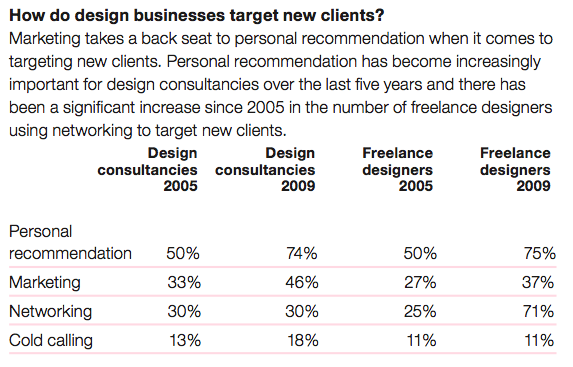

I also looked more closely at the North West as this is the area we will be located in and it would be good to know in more detail about the state of design in this area.


Useful organisations
Now I know a bit more about our proposed design company, I have been able to find out some brilliant information from The Design Council about useful organisations...


Finances
Steph probably had one of what I would class the most boring jobs, she was to find out about finances and legal stuff. She could only find out certain bits and pull it all together once we had decided how much rent would be and start-up costs. We also all decided that we would earn £22,000 a year so she could work out our daily rate from that.
IMAGE
IMAGE
Saturday, 30 April 2011
Enterprise group meeting 4
We have each been getting on ok but today was our last chance to make sure everyone was ok with what was left to find out and what we get put on each slide of the presentation. We looked through all the previous lecture notes and saw if we were missing anything. Individually we will carry on collecting the final pieces of information over the weekend and meet up on Monday at Jo's flat and create our presentation.
I still need to do some more PEST and SWOT analysis of other Manchester (and UK) design companies who could be our competitors. Also I am going to look further into our own identity and possible presentation designs.

I still need to do some more PEST and SWOT analysis of other Manchester (and UK) design companies who could be our competitors. Also I am going to look further into our own identity and possible presentation designs.

Friday, 29 April 2011
SWOT and PEST for us
Jonny has evaluted our SWOT and PEST for our own business. Really detailed! This is going to be brilliant in helping us progress.


Ecological/Environmental:- It can be a big selling point for the business to hold ethical and environmental values and it's very important that the company is seen to act responsibly.
- FSC certified paper is almost standard now and recycled stocks and vegetable inks are extras which could help a design studio to take this issue further.
- Recycling paper, card and ink cartridges and responsibly disposing of old equipment are examples of where we can act considerately within the studio environment itself.
Copyright Matters:- Copyright legislation is in place which protects the work that you create and prevents you from using other people's work without their authorisation.
- In many cases you may be prepared to assign your rights in your original work to your client, or licence them to use it while retaining ownership. This is something to be agreed between you and your client and should be clearly set out in any contract between you.
- If you have employees you should make clear in their contract of employment that the copyright of any work they produce belongs to you, their employer.
- The Intellectual Property Office (IPO) is responsible for intellectual property matters in the UK. The IPO website contains comprehensive information on copyright issues.
Funding/Grants/Initiatives:- There are places that do offer non-repayable grants should you present a sound business plan to show how you would use the capital. Such places include; The Arts Council, The Princes Trust, National Enterprise Scheme.
- Networking can present opportunities that could lead to you obtaining investment. Perhaps from venture capitalists for example.
Business Stationary:- When you design a letterhead and other business stationery for a company, remember that certain company details must by law be included on things like letterheads, order forms and other formal documents. You can find out more on the Companies House website.
Health & Safety:- You must also make sure that you comply with health and safety legislation which covers all aspects of work place health and safety.
- Employers have a duty to ensure the health and safety at work of all their employees and those with more than five employees must prepare a written health and safety policy statement - this wouldn't affect us yet as we only have four but it's something we would need to bear in mind if we expanded.
Fire Safety:- All employers must comply with fire safety regulations - this means carrying out a fire risk assessment at your premises and putting in place fire precaution measures. These could include fire alarm systems and extinguishers as well as clearly signed escape routes.
- We are responsible not only for the safety of your staff but also of anyone who might be on your premises, like clients or suppliers.
Employment Legislation:- Anyone employing staff must comply with employment legislation. The major pieces of legislation that we must be aware of include; The National Minimum Wage Act, The Working Time Regulation, The Employment Rights Act.
Disability Legislation:- You must make sure that you do not treat a disabled employee or job applicant less favourably than someone else accessing goods and services.
- You must make sure that disabled people are not treated less favourably and that they can access any services you provide. You may need to make physical changes to your premises to ensure this is the case.
Economic Factors:
Home Economy:- Current economic climate means it is a challenging environment that faces any kind of new business opening in the UK today.
- Fragile financial system means banks are unwilling to lend as freely as they used to which places massive dependancy upon the viability of the business plan which is key to securing a start up loan.
- Government cutbacks in spending have hit the arts and creative industries heavily with 30% reductions in spending for the Art council.
- On a more positive note, the creative industries was in fact one of the strongest performing sectors throughout the recent recession.
- Some have claimed graphic design to be 'recession-proof' in the past since more emphasis is placed on a businesses' promotion and so design agencies will be in demand.
- We have decided to locate our studio in Manchester which appears to have a strong creative community and many graphic design studios - particularly in suburbs such as Salford and Stockport.
- Investigation into the specific Manchester region's economic status would be required for more in depth knowledge of the climate.
Overseas Economy:- Many other economies around the world have suffered similarly to the UK over the past few years and have recovered at widely varying rates.
- Graphic designers often work on projects that involve overseas clients and if we were to be targeting certain clientele in other countries, then their economic climate may well affect their spending upon promotional services such as graphic design.
Interest/Exchange Rates:- Both interest and exchange rates have fluctuated vastly as a result of the recent economic downturn which will have impacted heavily upon all business types.
Seasonality Issues:- Graphic design is in demand all year round but certain holiday periods for example are likely to increase demand further within particular areas of the industry.
- Many businesses also see the start of a new year as the opportunity to undertake a re-brand or to step up their promotion.
Monetary Issues:- Due to student debts and difficulty in accessing extra finance to use for start up capital, it will be essential to keep initials costs as low as possible without impacting upon the capabilities of the studio.
- A sound business plan will be vital in order to obtaining large some of capital such as bank loans which are crucial for funding the high set up costs.
Product/Services:- In many current graphic design studios, they seem to try and offer potential clients the 'whole package' of a range of different services so covering as many areas of design as possible would be beneficial.
- However, it is also highly likely that certain clients will be searching for highly specialised design services and so how we pitch ourselves in the market will be key to attracting the desired customer base. Being a studio with a specialised skills set could prove to be a great selling point for our company.
Sociological Factors:
Lifestyle Trends:- Graphic design is impacted upon heavily by emerging lifestyle trends but graphic design itself can be responsible for setting lifestyle trends. Keeping up to date with trends within the industry will be important in maintaining a confident and contemporary edge to the business.
- Trends and buzzwords come and go very quickly regardless of which sector of design you work in and you can't really fail to notice them once they are around. Playing on these things are risky as the company could quickly become outdated when trends move on to other things.
- It's also very important to retain a distinctive style that is unique to our business so that customers can recognise us for being a quality firm in the areas that we are specialists in.
Demographics:- The demographics that designers can produce work for ranges across the ages but, for our business, we were looking to gain clients that are small to medium size businesses and from the not-for-profit sector.
- This may involve a younger clientele with small start up businesses which are looking to grow and are perhaps more likely to allow a little more creative freedom for whoever produces the identity and promotional material.
Brand/Company:- The way in which a graphic design company brands and promotes itself is one of the most important aspects of the business as we are essentially showing other people what we are capable of doing for them.
- Building a professional body of work and promoting ourselves are also key steps to establishing our own brand. If a good reputation is built within the industry then recommendations and past work should draw in a large volume of work.
Consumer Buying Patterns/Fashion:- Buying patterns will be affected by ongoing trends at the time and will alter the type of work demanded by customers.
- It is up to us as designers to be on top of what's in fashion at the time in order to be able to direct our clients as to what is appropriate for them at that point.
Advertising/Publicity:- The work that graphic designers produce is often meant to be out there in the public domain and to attract attention or promote something for example.
- Therefore it is of high importance that anything produced does not offend ethnic or religious groups or certain demographics of the general public. This is avoided by being informed about what we are doing through conducting thorough research on the background of each project.
- Graphic design is also something that has power to persuade public opinion and so with that must come a responsibility to fully consider what we produce and the effects it may have, although of course some work is intended to shock etc.
Technological Factors:
Competing Technology:- As a small design studio that is just starting up we may find ourselves facing competition from more established businesses that have greater resources and better equipment.
- We will also be reliant on the technology that we decide to use keeping itself at the head of the market, however since the Adobe package is industry standard then this shouldn't become an issue.
Research Funding:- For every project we undertake research will make up a fundamental part of it as graphic design must be informed. As a result, funding for research visits to cities, galleries, museums or the purchase of books, magazines or journals should be considered.
- Resulting from research visits are wider factors to think about such as travel costs, eating out with clients and purchasing samples for example.
Associated/Dependant technologies:- Apple computers and software is practically standard throughout the design industry and comes with high price tag. Every member of the business will need to have their own computer to work on in the studio whilst a company laptop or i-pad may be needed for meeting clients or giving pitches and presentations.
- Keeping up to date with new developments in software or brand new products is important to maintain the current and contemporary feel of the business whilst it presents a professional image to clients.
Replacement:- Software packages or developments may be important to keep up with but are also expensive issues to resolve. On a technical level, it is also important to enable us to develop our own skills and perhaps increase the skills and services we can offer to clients.
Maturity of technology:- Most technology is expected to last between 3 and 5 years so it will be beneficial to buy brand new equipment from the start so that we wont have to think about replacing it for the short term future.
Information and Communication:- With everybody having computers it will mean we can correspond by email with each other when we aren't in the studio as well as with clients.
- Social networking will also allow us to utilise modern communication to keep in touch with contacts, businesses and clients.
Licensing/Patents:- The company brand/logo can be trademarked so it is then investigated to check it has not been plagiarised in any form before it then becomes registered.
- Things that can be trademarked include; Custom typeface, arrangement or layout, colour and shape (packaging etc.)
- Registered designs can include; Decorative details, add ons, covers and cases.
- Every drawing you create is copyrighted. You must sign and date it. For an official date you can ask a bank to stamp your work or you could post it to yourself.
- Patents last for a maximum of 20 years.
- Trademarks and logos last forever but must be renewed every 10 years.
- Design rights last for up to 25 years but must be renewed every 5 years.
- Copyright lasts up until 70 years after death.
Intellectual Property Issues:- Intellectual property rights can cover ideas and inventions which can the be patented. There is an intellectual property office which deals with matters surrounding this.
He also found this model to use as a basis which will be really helpful for me to look into our competitors SWOT and PEST analysis.


Political Factors
Ecological/Environmental:- It can be a big selling point for the business to hold ethical and environmental values and it's very important that the company is seen to act responsibly.
- FSC certified paper is almost standard now and recycled stocks and vegetable inks are extras which could help a design studio to take this issue further.
- Recycling paper, card and ink cartridges and responsibly disposing of old equipment are examples of where we can act considerately within the studio environment itself.
Copyright Matters:- Copyright legislation is in place which protects the work that you create and prevents you from using other people's work without their authorisation.
- In many cases you may be prepared to assign your rights in your original work to your client, or licence them to use it while retaining ownership. This is something to be agreed between you and your client and should be clearly set out in any contract between you.
- If you have employees you should make clear in their contract of employment that the copyright of any work they produce belongs to you, their employer.
- The Intellectual Property Office (IPO) is responsible for intellectual property matters in the UK. The IPO website contains comprehensive information on copyright issues.
Funding/Grants/Initiatives:- There are places that do offer non-repayable grants should you present a sound business plan to show how you would use the capital. Such places include; The Arts Council, The Princes Trust, National Enterprise Scheme.
- Networking can present opportunities that could lead to you obtaining investment. Perhaps from venture capitalists for example.
Business Stationary:- When you design a letterhead and other business stationery for a company, remember that certain company details must by law be included on things like letterheads, order forms and other formal documents. You can find out more on the Companies House website.
Health & Safety:- You must also make sure that you comply with health and safety legislation which covers all aspects of work place health and safety.
- Employers have a duty to ensure the health and safety at work of all their employees and those with more than five employees must prepare a written health and safety policy statement - this wouldn't affect us yet as we only have four but it's something we would need to bear in mind if we expanded.
Fire Safety:- All employers must comply with fire safety regulations - this means carrying out a fire risk assessment at your premises and putting in place fire precaution measures. These could include fire alarm systems and extinguishers as well as clearly signed escape routes.
- We are responsible not only for the safety of your staff but also of anyone who might be on your premises, like clients or suppliers.
Employment Legislation:- Anyone employing staff must comply with employment legislation. The major pieces of legislation that we must be aware of include; The National Minimum Wage Act, The Working Time Regulation, The Employment Rights Act.
Disability Legislation:- You must make sure that you do not treat a disabled employee or job applicant less favourably than someone else accessing goods and services.
- You must make sure that disabled people are not treated less favourably and that they can access any services you provide. You may need to make physical changes to your premises to ensure this is the case.
Economic Factors:
Home Economy:- Current economic climate means it is a challenging environment that faces any kind of new business opening in the UK today.
- Fragile financial system means banks are unwilling to lend as freely as they used to which places massive dependancy upon the viability of the business plan which is key to securing a start up loan.
- Government cutbacks in spending have hit the arts and creative industries heavily with 30% reductions in spending for the Art council.
- On a more positive note, the creative industries was in fact one of the strongest performing sectors throughout the recent recession.
- Some have claimed graphic design to be 'recession-proof' in the past since more emphasis is placed on a businesses' promotion and so design agencies will be in demand.
- We have decided to locate our studio in Manchester which appears to have a strong creative community and many graphic design studios - particularly in suburbs such as Salford and Stockport.
- Investigation into the specific Manchester region's economic status would be required for more in depth knowledge of the climate.
Overseas Economy:- Many other economies around the world have suffered similarly to the UK over the past few years and have recovered at widely varying rates.
- Graphic designers often work on projects that involve overseas clients and if we were to be targeting certain clientele in other countries, then their economic climate may well affect their spending upon promotional services such as graphic design.
Interest/Exchange Rates:- Both interest and exchange rates have fluctuated vastly as a result of the recent economic downturn which will have impacted heavily upon all business types.
Seasonality Issues:- Graphic design is in demand all year round but certain holiday periods for example are likely to increase demand further within particular areas of the industry.
- Many businesses also see the start of a new year as the opportunity to undertake a re-brand or to step up their promotion.
Monetary Issues:- Due to student debts and difficulty in accessing extra finance to use for start up capital, it will be essential to keep initials costs as low as possible without impacting upon the capabilities of the studio.
- A sound business plan will be vital in order to obtaining large some of capital such as bank loans which are crucial for funding the high set up costs.
Product/Services:- In many current graphic design studios, they seem to try and offer potential clients the 'whole package' of a range of different services so covering as many areas of design as possible would be beneficial.
- However, it is also highly likely that certain clients will be searching for highly specialised design services and so how we pitch ourselves in the market will be key to attracting the desired customer base. Being a studio with a specialised skills set could prove to be a great selling point for our company.
Sociological Factors:
Lifestyle Trends:- Graphic design is impacted upon heavily by emerging lifestyle trends but graphic design itself can be responsible for setting lifestyle trends. Keeping up to date with trends within the industry will be important in maintaining a confident and contemporary edge to the business.
- Trends and buzzwords come and go very quickly regardless of which sector of design you work in and you can't really fail to notice them once they are around. Playing on these things are risky as the company could quickly become outdated when trends move on to other things.
- It's also very important to retain a distinctive style that is unique to our business so that customers can recognise us for being a quality firm in the areas that we are specialists in.
Demographics:- The demographics that designers can produce work for ranges across the ages but, for our business, we were looking to gain clients that are small to medium size businesses and from the not-for-profit sector.
- This may involve a younger clientele with small start up businesses which are looking to grow and are perhaps more likely to allow a little more creative freedom for whoever produces the identity and promotional material.
Brand/Company:- The way in which a graphic design company brands and promotes itself is one of the most important aspects of the business as we are essentially showing other people what we are capable of doing for them.
- Building a professional body of work and promoting ourselves are also key steps to establishing our own brand. If a good reputation is built within the industry then recommendations and past work should draw in a large volume of work.
Consumer Buying Patterns/Fashion:- Buying patterns will be affected by ongoing trends at the time and will alter the type of work demanded by customers.
- It is up to us as designers to be on top of what's in fashion at the time in order to be able to direct our clients as to what is appropriate for them at that point.
Advertising/Publicity:- The work that graphic designers produce is often meant to be out there in the public domain and to attract attention or promote something for example.
- Therefore it is of high importance that anything produced does not offend ethnic or religious groups or certain demographics of the general public. This is avoided by being informed about what we are doing through conducting thorough research on the background of each project.
- Graphic design is also something that has power to persuade public opinion and so with that must come a responsibility to fully consider what we produce and the effects it may have, although of course some work is intended to shock etc.
Technological Factors:
Competing Technology:- As a small design studio that is just starting up we may find ourselves facing competition from more established businesses that have greater resources and better equipment.
- We will also be reliant on the technology that we decide to use keeping itself at the head of the market, however since the Adobe package is industry standard then this shouldn't become an issue.
Research Funding:- For every project we undertake research will make up a fundamental part of it as graphic design must be informed. As a result, funding for research visits to cities, galleries, museums or the purchase of books, magazines or journals should be considered.
- Resulting from research visits are wider factors to think about such as travel costs, eating out with clients and purchasing samples for example.
Associated/Dependant technologies:- Apple computers and software is practically standard throughout the design industry and comes with high price tag. Every member of the business will need to have their own computer to work on in the studio whilst a company laptop or i-pad may be needed for meeting clients or giving pitches and presentations.
- Keeping up to date with new developments in software or brand new products is important to maintain the current and contemporary feel of the business whilst it presents a professional image to clients.
Replacement:- Software packages or developments may be important to keep up with but are also expensive issues to resolve. On a technical level, it is also important to enable us to develop our own skills and perhaps increase the skills and services we can offer to clients.
Maturity of technology:- Most technology is expected to last between 3 and 5 years so it will be beneficial to buy brand new equipment from the start so that we wont have to think about replacing it for the short term future.
Information and Communication:- With everybody having computers it will mean we can correspond by email with each other when we aren't in the studio as well as with clients.
- Social networking will also allow us to utilise modern communication to keep in touch with contacts, businesses and clients.
Licensing/Patents:- The company brand/logo can be trademarked so it is then investigated to check it has not been plagiarised in any form before it then becomes registered.
- Things that can be trademarked include; Custom typeface, arrangement or layout, colour and shape (packaging etc.)
- Registered designs can include; Decorative details, add ons, covers and cases.
- Every drawing you create is copyrighted. You must sign and date it. For an official date you can ask a bank to stamp your work or you could post it to yourself.
- Patents last for a maximum of 20 years.
- Trademarks and logos last forever but must be renewed every 10 years.
- Design rights last for up to 25 years but must be renewed every 5 years.
- Copyright lasts up until 70 years after death.
Intellectual Property Issues:- Intellectual property rights can cover ideas and inventions which can the be patented. There is an intellectual property office which deals with matters surrounding this.
Thursday, 28 April 2011
Sauce
After a very long time in the Library flicking through the design magazines and shouting random words at each other we came up with Sauce for our business name. We wanted something that sounded right (obviously) and it didn't need to have Design or Creative in the name.

I have quickly looked into a possible typeface to be used in our logo. Something bold but with rounded edges and that is a sans serif...


I have quickly looked into a possible typeface to be used in our logo. Something bold but with rounded edges and that is a sans serif...


Logo ideas have been quickly developed as this is not a primary concern for submission and the presentation, however we do need an identity. I altered the kerning and added colour and shine details to enhance the effect of sauce. A great idea would be to actually write this in sauce, however a logo should be a vector and suitable for use on stationary etc. I don't think an image would be suitable.
huiln
Subscribe to:
Posts (Atom)